
Waste management has become a trust issue.
Digital tracking is here to help.
The catalyst for all this is digital waste tracking. From April 2026 permitted operators were allowed to start recording waste movements on a new national service, and from October 2026 it becomes a legal requirement across England, Wales and Northern Ireland, with Scotland following in January 2027.
Around 12,000 permitted waste receiving sites are in the first phase, and more than 100,000 operators are on the way. This digital system will replace a paper system with a near-real-time, auditable record of where waste goes at every stage of its journey. As the Environment Agency has said, compliance becomes easier to demonstrate, and non-compliance becomes harder to hide.
The Waste Crime Action Plan is here too.
Sitting alongside digital waste tracking is the Government’s Waste Crime Action Plan, built on three objectives: prevent, enforce and remediate. It comes with £45 million of additional Environment Agency funding over three years, expanded police-style powers, and a clear commitment to transparency.
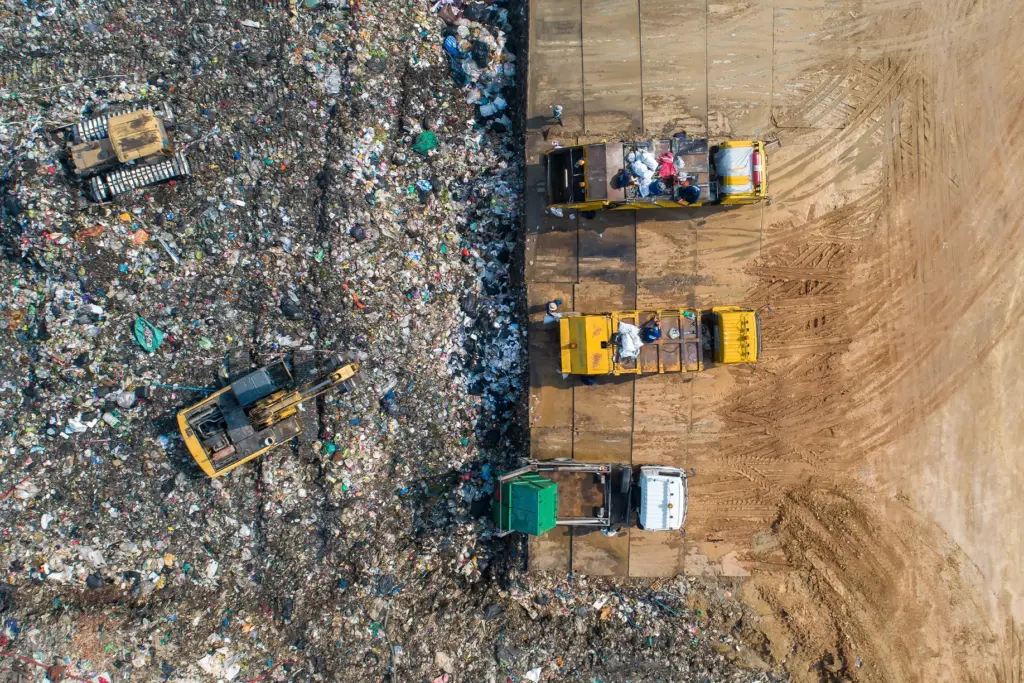
In May 2026 the Environment Agency published a national watchlist of 117 high-priority waste sites for the first time, pitching it as a deliberate act of transparency so that communities can see where it’s acting. The scale of the problem it’s addressing is very large, with waste crime costing the economy an estimated £1 billion a year and local authorities in England dealing with 1.26 million fly-tipping incidents every year.
As always, trust will have to be earned.
The commercial reality of all this is something worth paying close attention to. Producers of waste are now expected to actually satisfy themselves that their waste is being handled lawfully. The Environment Agency has been very explicit that businesses and industry must assure themselves their waste is not ending up illegally dumped.
That single expectation moves waste onto the boardroom table. Because a company’s choice of waste partner is now a question of corporate risk, reputation and legal exposure. Boards don’t tend to buy the cheapest option when their own name is attached to the outcome. Instead, they buy the one they can trust, and they want to see the evidence.
A more level playing field.
There’s a welcome side effect of this new legislation for the operators who play by the rules. For years, responsible businesses have been undercut by those who cut corners, because it’s difficult to charge properly for doing something well when a competitor is quoting less for doing it badly.
Digital tracking closes that gap hugely. The Environment Agency has said it will reduce routine regulatory activity at consistently well-performing sites and act decisively against those that stay in the lowest performance bands. And it’s prepared to name illegal sites where the evidence supports it! The playing field is being levelled in favour of quality, which is exactly the market a good operator wants to compete in.
Proof and trust is in the data.
Now is the time for waste management marketing to change gear. When the buyer is weighing risk rather than price, the winning approach is undeniable proof.
Every responsible operator now has access to a complete, auditable digital trail of exactly where waste went and what happened to it, which means the promises the sector has always made can finally be backed up. Permits, performance bands, compliance records, recovery and recycling rates, safety performance, carbon impact: all of them become driven by real facts.
The operators who lead with that evidence will look like the safe choice, because they actually will be, and they’ll be able to prove it.

Being considerate goes a long way with the neighbours.
There is a second audience here that the sector always seem to forget about, and that’s the public – the communities who live next to these sites. They notice the lorries, the odour, the traffic. They read the coverage, and they can also look up the data themselves, because the Environment Agency has launched an online Waste Hub specifically to give people access to trusted information about waste activity near them.
Planning permission, local consent and the freedom to expand, all depend on how a community feels about an operator, and that feeling is shaped long before an application is put in. An operator that has explained itself openly, invested in its neighbours and made its environmental performance easy to check will find that door far easier to open.
Marketing your credibility is a powerful currency of trust.
The most valuable thing a waste business can build right now isn’t scale or capacity… though both help. It’s actually credibility.
Credibility is something that’s now more measurable and publishable than ever. Effective environmental services marketing starts with what the data already says about you, then puts it where customers, communities, regulators and journalists can find it.
Our advice is to publish your performance rather than just describe it. Lead with safety, because it’s the clearest signpost for how seriously an operator runs its sites. Talk about the environmental outcome in numbers, like recovery rates, diversion from landfill and carbon avoided. And treat waste sector PR as a long-term investment in the licence to operate rather than a channel you call on when something goes wrong or you need to promote a new service.
Take advantage of the opportunity.
The waste sector is being handed a rare opportunity. Its regulator is actively working to remove the operators who undercut responsible businesses, and the new systems make it possible to tell the difference between the two very easily.
The market is being tilted towards the operators who can prove they do this well. Trust has become the product. The businesses that communicate it clearly, consistently and with evidence will be the ones that grow.
Let’s talk about how to turn your compliance, safety and environmental performance into the trust that wins contracts and long-term growth.