


MMC has a confidence problem, not just a scale problem

The scale of the opportunity makes the point worth getting right. Savills estimates that around 15% of UK homes are now built using modern methods, and that figure is climbing as lenders and insurers grow more comfortable. With a government target of 1.5 million new homes and a Future Homes Standard demanding low-carbon performance, the MMC sector has a real claim to be part of the answer. Offsite manufacturing delivers speed, precision and quality control that a building site struggles to match. Overall, it’s not the capability that’s in doubt, what lags behind is belief. But it’s belief that will unlock the finance, the insurance and the buyers that let the sector grow.
What’s holding MMC back?
Almost all of it turns out to be perception rather than performance.
Lenders have historically been nervous about mortgageability, wanting confidence that a home will have a resale market, a mainstream warranty and a lifespan of at least sixty years before they will lend on normal terms.
Insurers have been cautious as well, partly because they lack the long-run data on a young set of methods, and also because responsibility is shifting as early warranties begin to expire.
Valuers reach for something comparable that a newer approach just doesn’t always have yet.
And beneath all of it sits the shadow of post-war prefab, the temporary aluminium bungalow that still taints how some people think about the word modular, even though it bears no relation to a precision-engineered timber or steel system built to today’s standards. Of course, the buildings are sound, so the worry is more about proof, familiarity and reassurance.
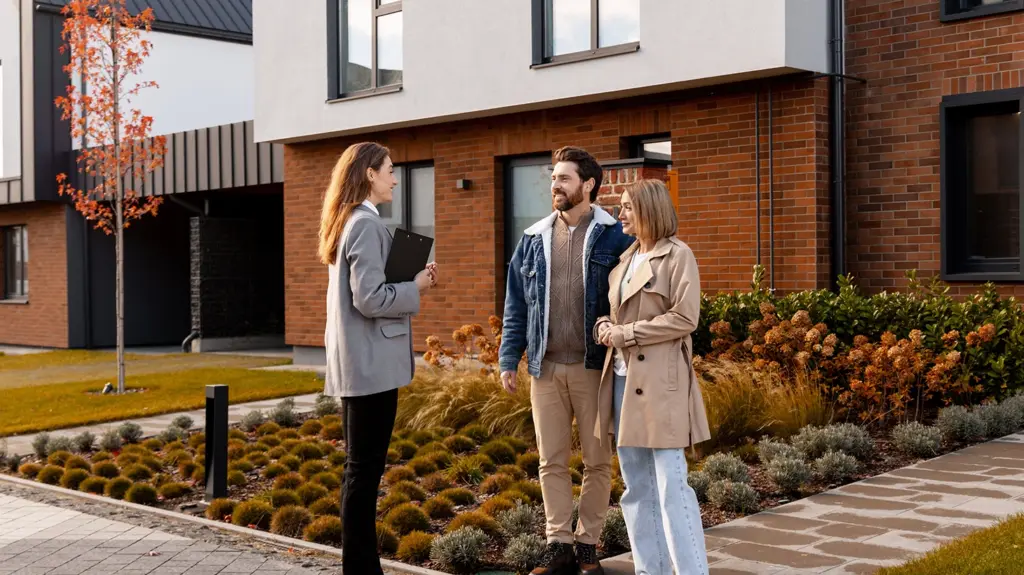
A problem of confidence is one we can easily change.
Oddly, it’s actually encouraging if there’s a confidence problem, as it’s an easier one to fix than a capability one. The evidence already exists with recognised assurance schemes, such as BOPAS and NHBC Accepts, now providing exactly the technical proof that lenders and insurers ask for. Plus a clear lesson from the market is that familiarity breeds confidence. The more experience a lender gains of these homes, the more easily it lends, and the developers who engage finance and warranty providers early, tend to find the doors open even easier.
How can marketing help MMC in real-terms?
The job of MMC marketing isn’t to generate excitement about factories and futuristic building techniques, because that’s already there. Its real job is to build confidence, and that means leading with the things a nervous market needs to hear.
Like leading with the warranty and the assurance scheme, because for a lender or an insurer these are the real headlines. Or with durability and whole-life cost, to meet the sixty-year question head-on. Or perhaps lead with proof, in the form of completed schemes that have been occupied, valued, mortgaged and lived in without any problems.
Every one of those is a confidence-building message, and confidence is what the trade needs to feel.
Let’s also tell the aesthetics and durability story.
They deserve a mention, because they’re actually where perception and reality have actually moved the furthest apart. The image many people still have of modular housing is of something temporary, boxy and cheap.
The reality is precision-manufactured homes that are built to tighter tolerances than their traditional equivalents. Plus they can be finished to any standard a client specifies. And so the gap between what MMC is and what people assume it is, is actually an easy win.
This is because a sector that looks better and lasts better than people’s perception of it has a really strong story waiting to be told.

The honest story of the supply chain is important to tell.
The MMC supply base is still developing, so lead times can vary, and the sector has seen enough high-profile difficulties to make buyers cautious about a manufacturer’s stability.
The right response is to actually compete on it. A modular construction marketing approach that’s transparent about track record, financial resilience and projects delivered will reassure a nervous buyer far more effectively than one that stays silent and hopes the question’s not asked.
In a market that’s learned to worry about whether a manufacturer will still be there in five years, visible stability is in itself a powerful benefit.
Final thoughts.
From our viewpoint, MMC doesn’t need to simply prove it can build good homes, because that won’t be enough. What it needs to do is close the distance between the quality of the product and the confidence of the market. That gap is made of perception and familiarity (and proof). The brands that grow fastest will be the ones that start building confidence, deliberately and with evidence, until the market’s belief finally catches up with the buildings.
Let’s talk about how to turn the quality you already deliver into the confidence that wins lenders, insurers, valuers and buyers.