Is SEO Dead, or Just Evolving? What BrightonSEO 2025 Revealed
Is SEO dead? Is it GEO or AEO? Is AI going to take all our jobs? And most importantly… are seagulls going to destroy the world? Some of these questions were answered at BrightonSEO. Fortunately, the feathered apocalypse remains unconfirmed, but it was a perfect nod to BrightonSEO’s cheeky seagull mascot and playful branding.
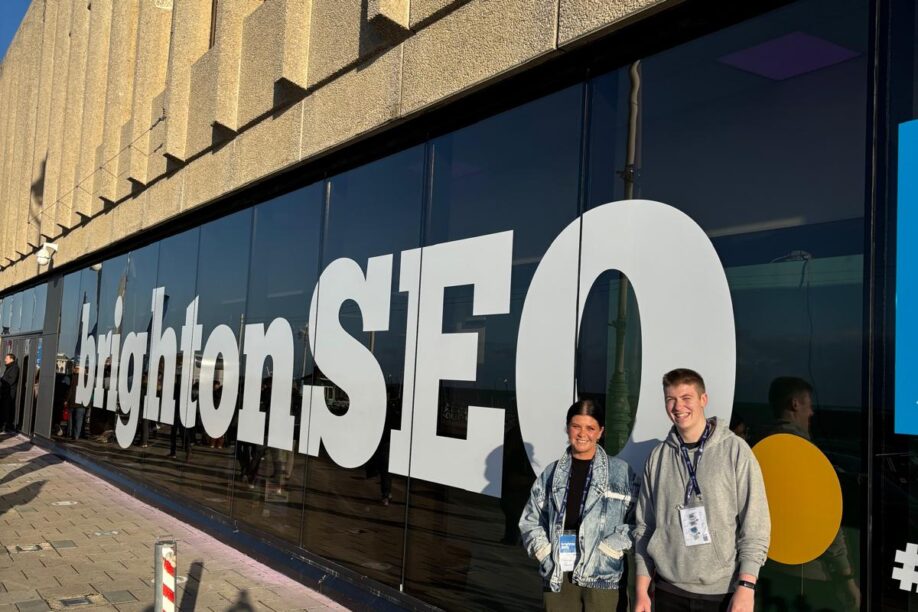
I recently joined Wyatt International and got the chance to attend BrightonSEO with my colleague Ash. It was my very first work event outside the office, and I honestly had no idea what to expect from “the biggest SEO event in the world.” What I found was a gathering of people from across the globe, greeted like heroes with ‘Steel pan man’ performing like a one-person orchestra. It’s wild to think this massive event started with meetups in a room above a pub.
Choosing which talks to attend was almost impossible; the schedule was packed, and the options seemed limitless. I’m going to share my perspective, highlighting key takeaways from the sessions I went to. Full disclosure: Some of the content definitely went over my head, but I’m pretty sure I wasn’t the only one. One thing was clear, though: AI is everywhere in SEO already, from automated audits and reporting to coding, with new tools emerging seemingly every day. Let’s dive in!
James Hocking: Role of schemas and LLMs in AI search
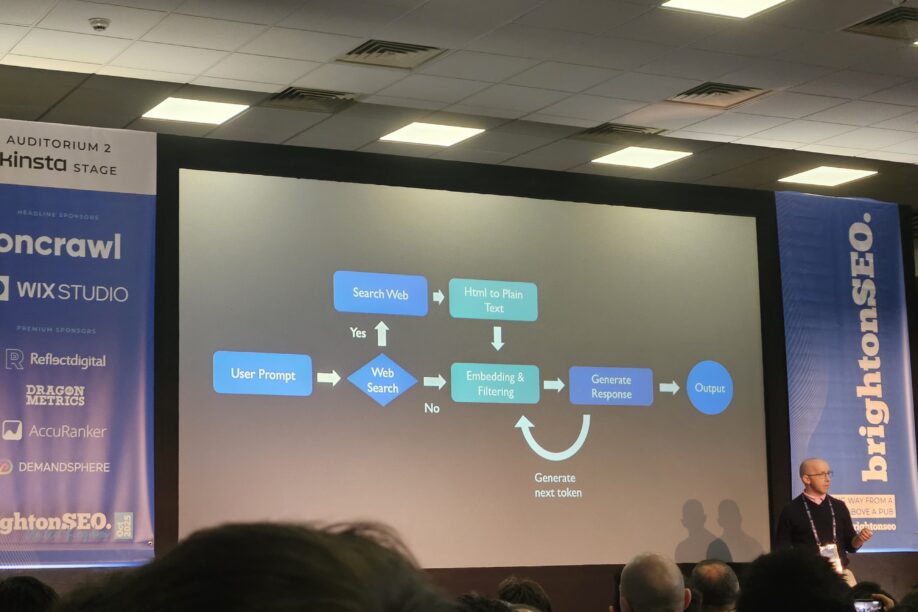
I figured it made sense to start with the first talk I attended, all about how LLMs actually function (which, unsurprisingly, came up at least a million times). But what a first talk to attend; my brain simultaneously expanded and melted a little. For those not in the know, Large Language Models (LLMs) don’t understand search like we do; they think in maths, not words. When given a prompt, an LLM decides whether to use tools like web search, gathers snippets, and generates a response. Meaning isn’t obvious to it, as mentioned by the speaker “my team was on fire last night” – did the team do well or are they literally in flames?
Enter the orchestrator. The behind-the-scenes system that fetches, filters, and interprets content for the LLM. The orchestrator doesn’t care about your JavaScript, but it does love schema markup. Schema gives it clean, structured notes about your site, what’s a review, what’s an article, making your content easier for AI to crawl and cite. The orchestrator will go for more recently updated pages and showing “last reviewed” dates help your site stay credible and retrievable.
You can’t control the prompts, but you can control clarity. Schema equals cleaner notes, clear, quotable writing equals easier retrieval. After all, the LLM is “the most forgetful journalist in your life”. It has no memory, no intuition, just maths and a very confident guess delivered politely.
The Future of Search
The future of search is a bit like a seagull on a mission: unpredictable, fast-moving, and somehow always landing where it shouldn’t. Good thing BrightonSEO brought the experts to show us how AI, clicks, and trust are shaping the journey.
What Are You Searching for Now? — Simon Wiley, The Telegraph
Search isn’t what it used to be. Traffic is slower to come by, competition is fiercer, and zero-click searches are everywhere. People are increasingly finding answers without ever leaving the platform they started on. TikTok is now basically a visual search engine, and short-form videos are stealing attention from traditional search. Impressions are up year-on-year, but clicks are down, meaning rankings alone don’t guarantee visitors (hence the SEO is dead discussion). To stand out, you need fast value, a distinctive voice, and hooks that make people want to click. Trust has become king; users increasingly rely on AI overviews but will often look for an extra layer of validation through Reddit, YouTube, or other authentic sources. You need to meet them there also! You now need to tailor content for both humans and AI, as mentioned below. Create summaries, takeaways, and structured content, display trust signals like reviews and testimonials, and optimise metadata to make your answers clear and accessible.
The #1 Spot Is Gone: Here’s How to Win Anyway — Tamara Novitovic, Bazoom Group
One of the key takeaways from Tamara’s talk was that being number one in search rankings no longer guarantees traffic, a point echoed throughout BrightonSEO. With 87.6% of AI overviews appearing at the top of search results and cutting clicks by 34.5%, websites now have two audiences: humans and AI. To win, focus on building trust with real users, get cited across authoritative sources, and structuring your content so every LLM can read it. Use question-style headings, direct answers, tables, lists, and schema for authors and organisations. Freshness matters, as mentioned above by James Hocking. We need to be doing quarterly audits, merging thin pages, and updating “last reviewed” dates to signal reliability to both users and AI.
Diversifying formats matters too; short videos, embedded YouTube clips, carousels, and visuals all boost engagement. The mantra is simple: brand for people, structure for machines. If you nail this, you get trust, citations, and visibility in an increasingly zero-click world. If you take anything from this, it is clear that just doing good SEO essentially covers a lot of this anyway!
The key takeaway – rankings alone won’t cut it anymore. Build trust, structure your content for both humans and AI, keep it fresh, and diversify your formats. That’s how you stay visible and relevant in a zero-click world.
The Best Talks from BrightonSEO 2025 – According to Me, Obviously
Some talks made me think. Some made my brain short-circuit. And then there were the few that had me nodding plenty, laughing at niche jokes, and secretly typing “this is gold” into my notes app. These were the sessions that stood out, not just because of what was said, but how it was said.
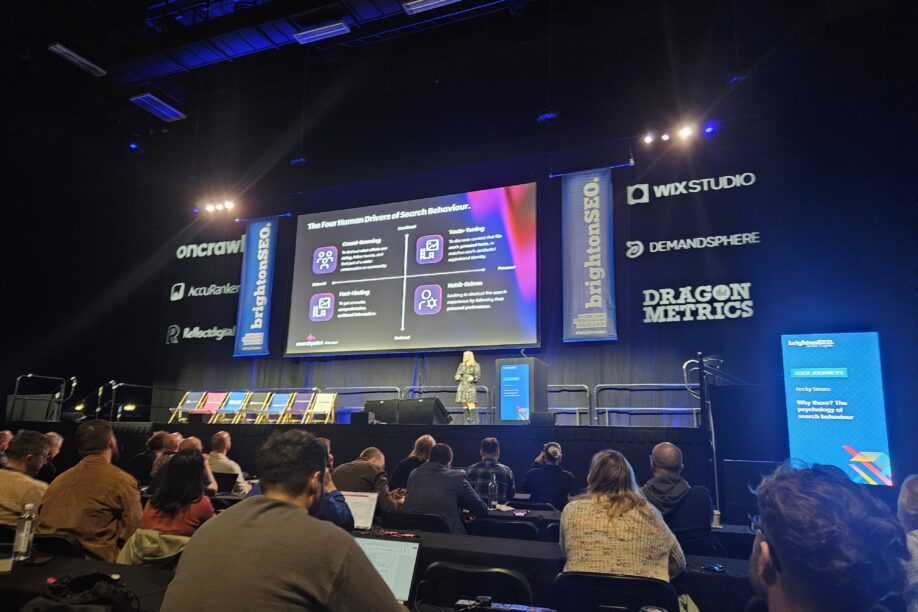
First up, Becky Simms, who took a deep dive into the psychology of search behaviour. Why we search the way we do and how we’re all just a bit predictable once you understand the patterns.
The Psychology of Search Behaviour
Becky’s key insight: search journeys are rarely linear. A user might hop from Reddit to Google, then TikTok, Instagram, and ChatGPT. If your brand isn’t present at the right points, you miss the chance to build relationships, capture intent, and shape the narrative. Which platform people choose depends heavily on age and occupation: under-44s bounce across five or more platforms, while those over 65 tend to stick to two or more. Certain professions are also more likely to use AI for search (think IT, research, consulting), while others lean less on it (performing arts, law enforcement, publishing). Humans are influenced by biases like confirmation bias, the “messenger effect,” and social proof, making platform choice as much emotional as cognitive. Quick dopamine hits live on TikTok and Instagram (System 1 thinking), while sites like Tripadvisor and Reddit trigger more deliberate, thoughtful System 2 evaluation.
The takeaway? You can’t force one channel to do everything. Map why your audience searches and decides who should tell your story: your brand, trusted influencers, UGC, or media partners. Combine this with strong E-E-A-T signals and thorough audience research, and you’re putting the odds in your favour, for both humans and AI.
Paid Media in 2026
My personal favourite presentation was from Sarah Barker, who tackled the future of paid media in 2026, complete with nerdy references to retro TV, Pokémon, and fantasy novels. She clearly knew her audience, and somehow made cost inflation and ad models feel as exciting as catching a shiny Gyarados.
Sarah’s main point: the paid landscape is changing fast. As AI transforms search, we’re competing for less traffic and spending more to get it. Users are asking longer, more complex questions, and AI-driven tools like Performance Max (Pmax) and the incoming “AImax” are becoming essential to keep up. Static keywords and copy are on the way out; AI now dynamically adjusts everything from URLs to ad text in real time.
The search ecosystem itself is fragmenting. This is from Google, Bing, and Amazon to TikTok, YouTube, and ChatGPT, each with its own advertising model. Knowing where your audience searches is key. Gen X might still be on Google, but Gen Z is finding products through TikTok or Instagram, meaning ad spend needs to follow behaviour, not habit. And the big one, agentic AI. We’re moving from user-owned to agent-owned journeys, where AI systems remember preferences, predict needs, and even make purchases autonomously. Ads may soon be optimised for these AI agents rather than human users. Sarah’s advice? Start experimenting now. Embed AI tools into your daily life so you understand how they think, act, and spend, because before long, they might be your next audience.
And the big one, agentic AI. We’re moving from user-owned to agent-owned journeys, where AI systems remember preferences, predict needs, and even make purchases autonomously. Ads may soon be optimised for these AI agents rather than human users. Sarah’s advice? Start experimenting now. Embed AI tools into your daily life so you understand how they think, act, and spend, because before long, they might be your next audience.
The AI Search Playbook presented by Mike King
And who could forget the keynote speaker, the grand finale of BrightonSEO. I mean, the man’s literally called King, it’s almost too perfect. Mike King took the stage with complete confidence and charisma to deliver The AI Search Playbook.
Mike’s message was clear: the future belongs to agents, AI systems that proactively gather information for users before they even search. Search itself is shifting from deterministic (“type, get answer”) to probabilistic (“AI guesses what you want before you do”). Answers now come from everywhere. This could be from Reddit, landing pages, YouTube, Instagram and more, meaning brands must meet audiences across every platform and format.
AIOs are stealing clicks but shaping preference, be where users find answers today, and you’ll own their trust tomorrow. Wikipedia, oddly enough, has seen a rise in traffic because ChatGPT often cites it when correcting itself, proof that trustworthy, well-structured content still wins. He noted that more pages don’t mean more traffic anymore. Over 50% of Google searches end in zero clicks, and only 1% of users click links in AIOs. Those clicks that do happen, though, tend to be far higher quality, coming from users who’ve already learned something.
By 2026, 90% of online content may be AI-generated, and Google doesn’t seem to mind; 86.5% of top-ranking pages already use AI assistance in some form. What matters most now is relevance, clarity, and structure. Mike stressed the need for clean formatting, tables, headings, bullet points, data-rich content, and yes, even chunking so that AIs can easily read and extract. Tools like Qforia, Marketbrew, and Relevance Doctor (yes, that’s a real name) are helping brands test and optimise for this new AI-first search world.
His advice? Engineer your relevance. Create unique data points, reduce ambiguity, and make your content readable for both humans and LLMs. Because ranking isn’t just about the top spot anymore, it’s about being understood by the machines that now guide the search.
Final Thoughts from BrightonSEO
To sum it all up, BrightonSEO was an absolute blast, part brain-melter, part inspiration, and all-around unforgettable. I loved feeling part of a global community of like-minded SEO nerds, getting to know my manager over shared lore (and only two months into Wyatt International, no less), and yes, discovering the best burger of my life at Patty & Bun – priorities, right?
BrightonSEO reminded me that SEO isn’t just a job, it’s part science, part psychology, part strategy, and occasionally part chaos (looking at you, seagulls). I left buzzing with ideas and a refreshed sense of how chaotic and exciting search can be. I can’t wait to put it all into practice and maybe grab another burger while I’m at it.